Information
Ligament Injuries of the Knee
Sprains and tears of the ACL, MCL, PCL and LCL, which can cause a pop, swelling and a knee that feels unstable.
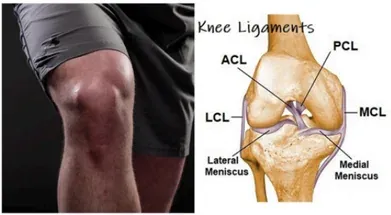
What is it?
This is an injury to one or more of the four main ligaments in your knee: the ACL, MCL, PCL and LCL. The injury can be a strain, a sprain or a complete tear of the ligament. These injuries are often caused by a powerful force, a direct blow to the knee, or a misstep or twist.
Let’s talk about it
Your knee has four main ropes (ligaments) that hold it together and keep it stable. If one of these ropes gets stretched or torn, you might hear a “pop” and your knee can feel unstable.
Common symptoms
- Pain
- Swelling within the knee
- A “pop” after the injury
- Knee stiffness
- Loss of knee range of motion
- Difficulty walking
- Tenderness at the joint line
- A feeling that the knee is unstable
Treatment options
Initial treatments include resting, icing, compressing, and elevating the knee. You might need to use a brace or a cane for a short time.
Common treatment approaches
- Short-term immobilization and bracing
- Rest, ice, compression and elevation
- Crutches or a cane to take weight off the knee while it heals, and working on knee motion before strengthening
- A strengthening program
Who gets it, and how it is diagnosed
- Who: most commonly adolescent females and athletes.
- Causes: the ACL is most often injured in adolescents and females. The MCL is injured by a sideways force on the knee, a direct blow or a non-contact injury. The PCL is injured by a powerful force, a direct blow, a misstep, a twist or overextending the knee. The LCL is most often injured in car crashes and athletic injuries, by a direct blow or by overextending the knee.
- Checking the ligaments: your therapist or doctor tests each ligament by hand (for example with Lachman’s test and the drawer tests for the ACL and PCL, and stress tests for the MCL and LCL).
Prevention
- Weight loss
- Improving mobility
- Good posture in daily activities